

Last updated October 2026.
Quick answer: For a Sahara trip from Marrakech, pack light layers for hot days and seriously warm clothes for the nights, which can drop to just a few degrees above zero in winter. The essentials are a scarf or buff for sand, sunglasses, sunscreen, closed shoes, a power bank, a headlamp, your passport and some cash in dirhams. Keep it all in a soft bag or backpack, because you will usually leave big luggage behind when you head into the dunes.
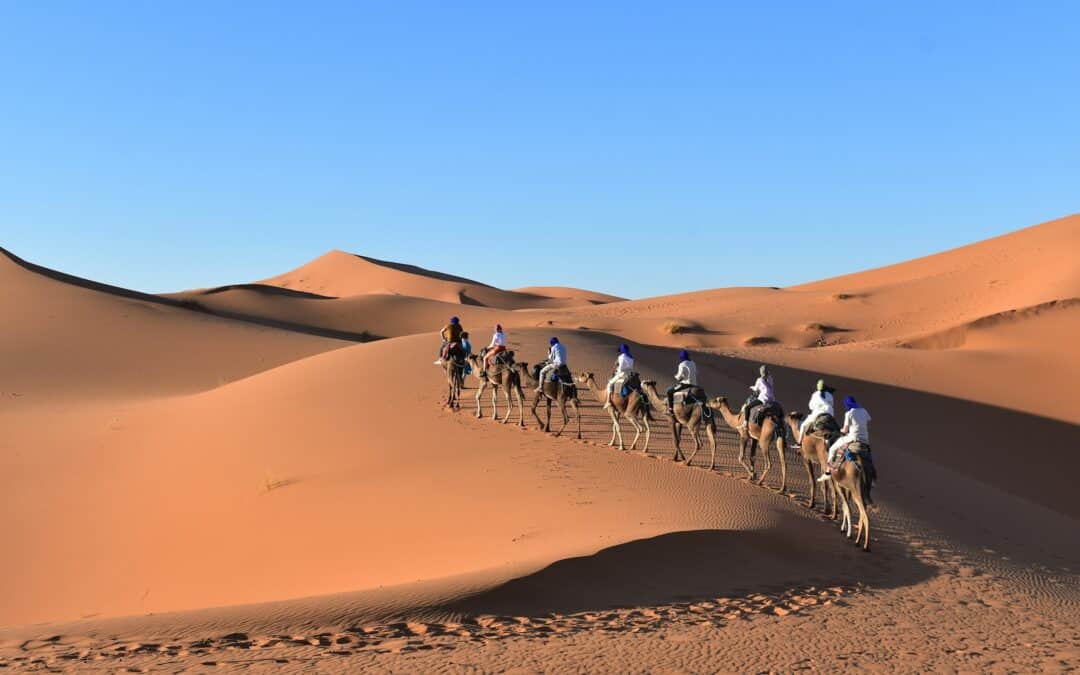
This checklist is built for the classic student trip: a few days in Marrakech plus a night (or two) at a desert camp in the Erg Chebbi dunes near Merzouga. Adjust it for the season using the temperatures below.
How cold does the Sahara get at night?
Colder than most people expect. Sand loses heat fast once the sun goes down, so even after a warm afternoon the night can feel chilly. These are approximate seasonal averages for the Merzouga area:
| Season | Average daytime high | Average night low | What it means for packing |
|---|---|---|---|
| Winter (Dec to Feb) | About 17°C | About 4°C | Puffer or thick fleece, beanie, gloves, warm socks |
| Spring (Mar to May) | About 26°C | About 14°C | T-shirts plus a warm mid layer. Windy days possible in May. |
| Summer (Jun to Aug) | About 38°C (40°C possible) | About 26°C | Light, loose, covering clothes, lots of water, sun protection |
| Autumn (Sep to Nov) | About 27°C | About 15°C | Light layers by day, a jumper or fleece at night |
These are averages. Individual nights can be colder, especially in December and January, and it often feels colder sitting outside around the fire. Planning your dates? See our month by month guide to Marrakech and the Sahara.
The Sahara packing checklist
Documents and money
- Passport (valid for at least 6 months is the safe choice).
- If you live abroad on a residence permit (for example in Spain or another EU country), your valid residence card so you can get back into your country of residence. Details in our Morocco visa guide.
- Debit card for ATMs and a backup card kept separately.
- Cash in dirhams for snacks, drinks, tips and souvenirs. ATMs are rare out in the desert.
- Travel insurance details saved offline.
Clothes
- Loose, breathable T-shirts and long sleeves (cover shoulders for villages and medinas).
- Long trousers or a long skirt. Light trousers are also more comfortable on a camel than shorts.
- Warm mid layer: fleece or wool jumper.
- Warm outer layer from October to April: puffer or windproof jacket.
- Beanie and light gloves in winter.
- Thick socks for the camp at night.
- Pyjamas or comfy clothes to sleep in.
- Swimsuit only if your hotel in Marrakech has a pool.
Shoes
- Closed trainers or light hiking shoes for the dunes and road stops.
- Sandals or flip-flops for the camp. Many people walk barefoot on the sand, but it gets very hot in the day.
Sun and sand protection
- Scarf, buff or cheche (desert turban) to protect your face from wind and sand. You can also buy one locally.
- Sunglasses, ideally wraparound.
- High SPF sunscreen and lip balm with SPF.
- Cap or hat.
- Moisturizer: the desert air is very dry.
- Eye drops if you wear contact lenses, or bring glasses instead. Sand and lenses do not mix.
Tech
- Power bank (fully charged). Camps may have limited charging.
- Phone charger and, depending on where you come from, a plug adapter. Morocco uses type C and E plugs (the round two-pin plugs used in most of continental Europe), around 220 to 230V and 50Hz.
- Headlamp or small torch for walking around the camp at night.
- Ziplock bags to keep sand out of your phone and camera.
- Offline maps and an eSIM or local SIM (Maroc Telecom, Orange or inwi). Expect weak signal in the dunes.
- Leave the drone at home. Drones need prior authorization in Morocco and are confiscated at customs if undeclared.
Health and hygiene
- Reusable water bottle, refilled with bottled water.
- Hand sanitizer and wet wipes.
- Tissues or a small roll of toilet paper.
- Basic first aid: plasters, painkillers, something for an upset stomach, any personal medication with the prescription.
- Rehydration sachets for hot months.
- Small travel towel.
What bag should I bring for a Sahara trip?
A soft backpack or duffel works best. Hard suitcases are a pain on dirt tracks and on the walk to camp. On many desert trips you leave your main bag in the vehicle or at a hotel and take only a small day bag on the camel. Pack that small bag with:
- Warm layers for the night.
- Toothbrush, toothpaste, wipes and any medication.
- Power bank, phone, headlamp.
- Water and a snack.
- Scarf and sunglasses.
What should I wear on a camel ride?
Long, comfortable trousers (leggings or light joggers are perfect), closed shoes, a scarf around your face and sunglasses. Avoid short skirts and anything too tight. Keep your phone in a zipped pocket or across-body bag, because getting on and off a camel involves a surprising lurch.
What should I wear in Marrakech before the desert?
Comfortable and respectful. Light clothes that cover shoulders and knees are a good default in the medina, and the UK government suggests women may get less unwanted attention in loose clothing covering arms, legs and chest. More on local customs in our Morocco safety guide for students.
What not to pack for the Sahara
- A drone (see above).
- Your best white clothes: orange sand gets everywhere.
- Expensive jewellery you would hate to lose.
- A hard-shell suitcase if you can avoid it.
- Lots of euros in cash: take out dirhams instead. Our money in Morocco guide explains why.
Quick printable checklist
- Passport (and residence card if you live abroad)
- Cards and some dirhams
- Warm jacket, fleece, beanie, thick socks
- Long trousers and loose tops
- Closed shoes and sandals
- Scarf or buff, sunglasses, sunscreen, lip balm
- Power bank, charger, headlamp, ziplock bags
- Water bottle, sanitizer, wipes, tissues
- Basic meds and first aid
- Small day bag for the camp night
FAQ: packing for the Sahara
Do I really need a warm jacket for the desert?
From roughly October to April, yes. Winter nights around Merzouga average about 4°C, and it can feel colder in the open. In summer, a light layer is usually enough.
Can I charge my phone at a desert camp?
Many camps offer some charging, but it can be limited or shared. Bring a fully charged power bank so you are never stuck without a camera at sunrise.
Should I wear shorts in the Sahara?
Long, light trousers are better. They protect you from sun and sand, are more comfortable on a camel, and are more respectful when you stop in villages.
Do I need a plug adapter in Morocco?
It depends on your country. Morocco uses type C and E plugs at around 220 to 230V, the same as most of continental Europe. Travelers from the UK, US, Canada, Australia or Latin America will usually need an adapter, and should check their devices handle 220 to 230V.
Can I bring a drone to film the dunes?
Not without prior authorization from Moroccan authorities. Undeclared drones are confiscated at customs, so leave it at home.
Bag packed? Let’s go
Sojourners runs group trips to Marrakech and the Sahara. Groups meet in Morocco, so check each trip page for the meeting point. A sojourn is a home away from home, and that is the whole idea: travel with a group and feel at home wherever you land. Explore our Morocco trips or browse all upcoming trips. You can pay in full, with a deposit, or in up to 3 installments. For everything else, start with our Morocco travel guide for first-timers.
Sources
- Ministerio de Asuntos Exteriores de España: Recomendaciones de viaje, Marruecos
- GOV.UK: Morocco safety and security
- Government of Canada: Travel advice for Morocco
- Smartraveller (Australia): Morocco
- Champion Traveler: Merzouga seasonal weather averages
- World Standards: plug and voltage by country
- Lonely Planet: getting connected in Morocco