

Last updated October 2026. Safety advice can change. Check your own government’s travel advice shortly before you go.
Quick answer: Yes, Morocco is generally safe for students and young travelers, and Marrakech and the Merzouga desert area are among the most visited places in the country. Official travel advice from Spain, the UK, the US, Canada and Australia asks visitors to stay alert because of a general terrorism threat, and the problems students are most likely to face are petty theft, scams, unofficial guides and unwanted attention. Knowing a few local laws (on alcohol, photography, drones and public affection) makes a big difference.
What do official governments say about safety in Morocco?
Here is how each government currently frames it. Their wording differs, but the message is similar: travel is normal, stay alert.
| Government | Overall advice | Areas to avoid or take extra care |
|---|---|---|
| Spain (exteriores.gob.es) | Generally safe, exercise caution | Remote desert areas near the Algerian border and military zones. Extra care in isolated rural areas of the Rif near Ketama. |
| UK (gov.uk) | Terrorists are likely to try to carry out attacks. Stay vigilant. | Crowded places, transport hubs and tourist sites need extra awareness |
| US (travel.state.gov) | Exercise increased caution | Due to terrorism |
| Canada (travel.gc.ca) | Exercise a high degree of caution | Avoid all travel within 20 km of the Algerian border and parts of Western Sahara |
| Australia (smartraveller.gov.au) | Exercise a high degree of caution | Higher levels for Western Sahara and border regions |
Classic student trips to Marrakech and the Erg Chebbi dunes near Merzouga do not involve crossing the closed Algerian border or entering Western Sahara. Organized desert trips also use local drivers and guides, which Canada specifically recommends for remote desert travel.
What are the most common problems for tourists in Marrakech?
Not dramatic stuff. Mostly the annoying kind:
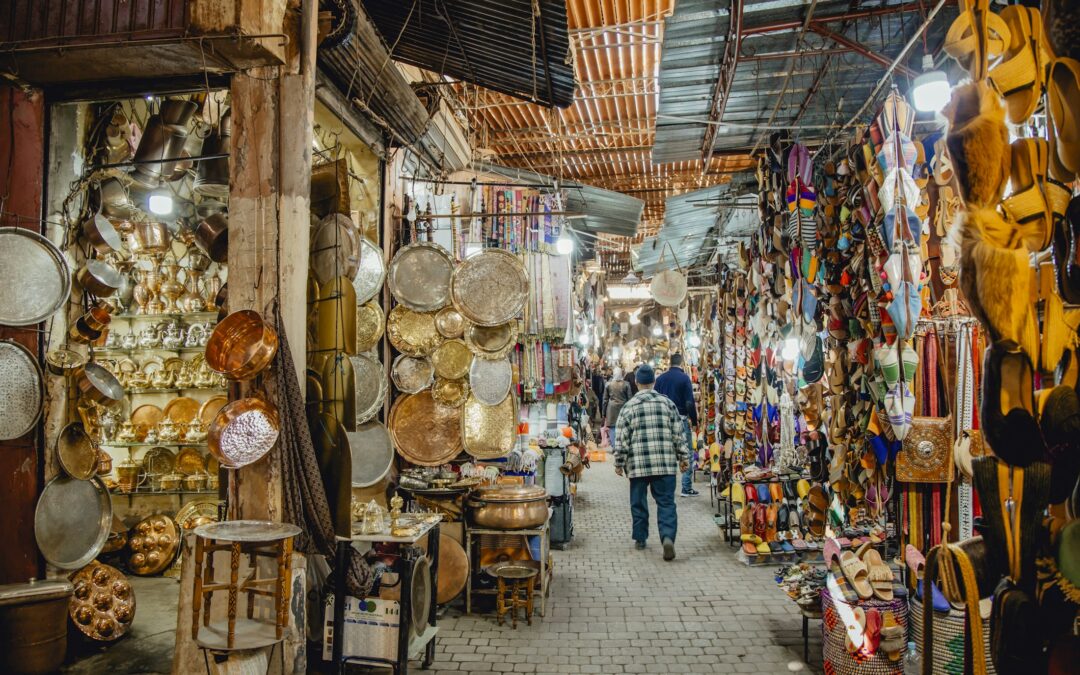
- Pickpocketing and bag snatching in busy medinas, markets and squares like Jemaa el-Fna.
- Unofficial guides who offer to show you the way, then ask for money or lead you to a shop.
- “That road is closed” tricks that redirect you to a relative’s shop or a tannery.
- Card fraud at ATMs or in shops.
- Henna and photo hustles where someone starts before you agree, then asks for payment.
How can I avoid scams in Morocco?
- Use an across-body bag that zips, and keep your phone in a front pocket.
- Download an offline map of the medina before you go. Walk with purpose, even when lost.
- A polite, firm “la, shukran” (no, thank you) works. Keep walking.
- Only use licensed guides arranged by your hotel or trip organizer.
- Use ATMs inside banks or malls and cover the keypad.
- Agree prices before any service: taxi, henna, photos with performers.
Haggling and tipping norms are covered in our money in Morocco guide.
Is Morocco safe for female students?
Many women travel in Morocco without problems, and plenty love it. Official advice is honest that women may get unwanted attention, especially when alone. Practical tips that help:
- Loose clothes that cover arms, legs and chest, as the UK government suggests. It reduces attention and is respectful.
- Walk in pairs or groups in the medina at night.
- Ignore comments rather than engaging. Head into a shop, cafe or hotel if someone keeps following you.
- Be wary of overly friendly strangers, including online. Australia warns about romance and fake friendship scams.
Which Moroccan laws should students know?
Alcohol
Alcohol is available in licensed bars, hotels and some restaurants. Drinking in the street or anywhere unlicensed is illegal. The UK government also warns that methanol in contaminated alcohol has caused deaths, so avoid unlabelled or homemade spirits.
Drugs
You may be offered hashish. Do not accept. Drug offences carry severe penalties in Morocco.
LGBTQ+ travelers
Same-sex sexual relations are illegal in Morocco, and Spain’s foreign ministry notes penalties of 6 months to 3 years in prison. The UK warns that public affection can lead to prosecution and that dating apps carry legal and safety risks. Many LGBTQ+ travelers visit Morocco, but discretion is important.
Public affection
Keep public displays of affection low-key for everyone. Holding hands is usually fine, kissing in public is not.
Drones
Drones need prior authorization from Moroccan authorities. Spain’s foreign ministry warns that undeclared drones are confiscated on arrival and can lead to police questioning, and Canada says they will be confiscated. Leave it at home.
Can I take photos of people in Morocco?
Always ask first, especially with women and children. Some people will say no, and some performers (snake charmers, monkey handlers, water sellers) expect payment for photos, so agree a price before you shoot. Never photograph military sites, police, government buildings or anything that looks official. A smile and a gesture toward your camera usually works as a question.
Is the food and water safe?
Moroccan food is a highlight, and busy places with high turnover are usually your best bet. Stick to bottled or sealed water, be careful with ice and raw salads outside good hotels, and carry hand sanitizer. Spain’s foreign ministry recommends extra hygiene, particularly with water outside big cities and food from street stalls.
How should I dress and behave to be respectful?
- Cover shoulders and knees in medinas and villages.
- Non-Muslims generally cannot enter active mosques in Morocco. Admire from outside.
- During Ramadan, avoid eating, drinking or smoking in public in the daytime.
- Use your right hand to eat and pass things.
- Learn a few words: salam, shukran, la, shukran.
Is it safer to travel to Morocco in a group?
For a first trip, it helps a lot. An organised group trip means drivers and desert camps arranged for you, someone who knows the route, and people around you in the medina at night. You also skip most of the hustle that targets lost, solo tourists. Sojourners runs group trips to Marrakech and the Sahara.
Safety checklist before you fly
- Read your own government’s travel advice the week before you go.
- Get travel insurance that covers medical care.
- Save emergency contacts and your embassy’s details offline.
- Share your itinerary with someone at home.
- Check your passport and, if you live abroad, your residence card. See our Morocco visa rules by nationality.
- Pack sensibly for the desert with our Sahara packing list.
FAQ: safety in Morocco for students and young travelers
Is Marrakech safe at night?
The main squares and restaurant areas are busy and lively at night. Stay in groups, avoid empty alleys in the medina, and use taxis or arranged transport back to your accommodation.
Is the Sahara desert safe to visit?
The Merzouga area is a well-established tourist destination. Go with official guides and drivers, and avoid remote areas near the Algerian border, which Spain and Canada advise against.
Can I drink alcohol in Morocco?
Yes, in licensed bars, hotels and restaurants. Drinking in the street or unlicensed places is illegal.
Is it safe to drink tap water in Morocco?
Stick to bottled or sealed water. Australia’s official advice says to avoid tap water.
What number do I call in an emergency in Morocco?
Check your government’s travel advice page for current emergency numbers and your embassy’s contact details, and save them on your phone before you travel. On a group trip, the Sojourners team is your first point of contact: you can message us from the chat in your traveler dashboard.
Travel smart, travel together
If this is your first time in Morocco, a group trip takes the stress out of the logistics so you can focus on the good stuff. Groups meet in Morocco, so check each trip page for the meeting point. A sojourn is a home away from home, and that is the whole idea: travel with a group and feel at home wherever you land. Explore our Morocco trips or browse all upcoming trips. You can pay in full, with a deposit, or in up to 3 installments. For everything else, start with our Morocco travel guide for first-timers.